Have you ever picked up a book about a famous person and wondered, “Did they actually write this themselves?” You’re not alone. Many readers get confused between autobiographies and biographies. The two words sound similar, but they tell stories in completely different ways.
Maybe you’re a student working on a report. Perhaps you’re trying to choose your next great read. Or you might be thinking about writing your own life story one day. Whatever brought you here, understanding the difference between these two types of books will change how you read them forever.
Let’s clear up the confusion once and for all. By the end of this article, you’ll know exactly what sets autobiographies and biographies apart, why it matters, and how to choose the right one for your needs.
The Simple Breakdown: Autobiography vs. Biography
Let’s start with the easiest way to remember the difference. Think about who is telling the story.
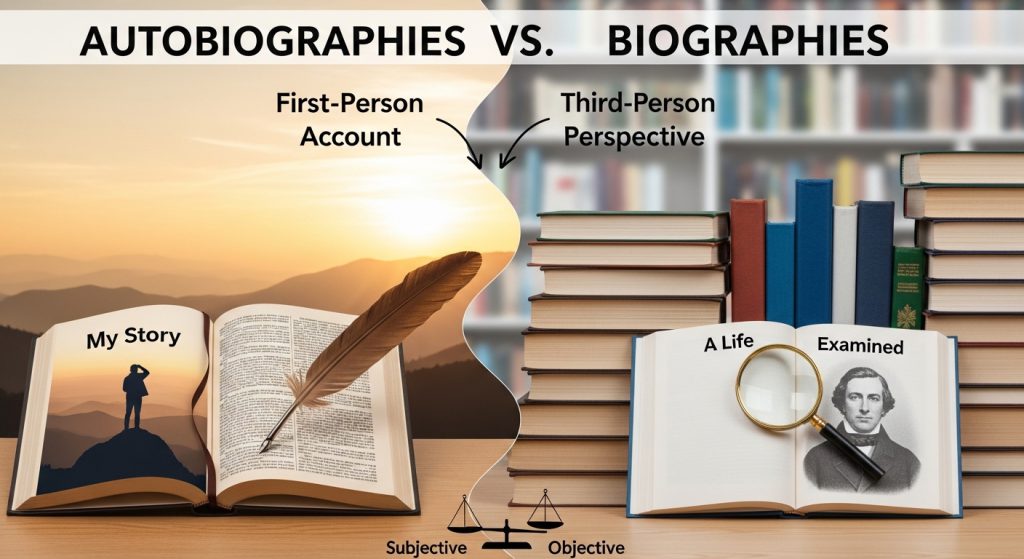
An autobiography is a story of a life written by the person who lived it. The author and the main character are the same person. When you read an autobiography, you’re getting a direct window into someone’s thoughts, feelings, and memories, told in their own words using “I” and “me.”
A biography is a story of a life written by someone else. The author is a different person who researches and writes about the subject’s life. Biographies use “he” or “she” because the writer is telling the story from the outside looking in.
Still confused? Let’s look at a simple comparison:
| Feature | Autobiography | Biography |
| Who Writes It? | The person themselves | Another person (a writer, historian, or journalist) |
| Point of View | First-person (“I was born…”) | Third-person (“She was born…”) |
| Sources | Personal memories, diaries, letters | Interviews, research, documents, archives |
| Tone | Personal, emotional, reflective | More objective, fact-based, analytical |
| Perspective | One person’s view of their own life | Outside view, often more balanced |
What Is an Autobiography? A Deeper Look
An autobiography is like being invited into someone’s private conversation. The author sits across from you and shares their life exactly as they remember it. This form of writing has been around for centuries, and it continues to captivate readers worldwide.
According to Irwin Gould’s guide on what is an autobiography, the word comes from three Greek roots: “autos” (self), “bios” (life), and “graphein” (to write). Put them together, and you get “self-life-write.”
Key Features of an Autobiography
When you pick up an autobiography, here’s what you can expect:
First-person perspective. The entire story flows through the author’s eyes. You feel their joy, their pain, and their personal growth. This creates an intimate connection that’s hard to find in other types of writing.
Chronological structure. Most autobiographies follow the natural order of life. They start with childhood, move through the important years, and end at the present. This timeline helps readers understand how past events shaped the person.
Personal reflection. The best autobiographies don’t just list events. They explore what those events meant. The author shares lessons learned, mistakes made, and wisdom gained along the way.
Emotional truth. Memory isn’t perfect, but autobiographies capture how the author felt about their experiences. This emotional honesty often matters more than exact dates.
Autobiography vs. Memoir: A Common Confusion
Many people use “autobiography” and “memoir” as if they mean the same thing. They don’t. Understanding this difference will make you a smarter reader.
As explained in the comprehensive autobiography guide, think of it this way:
An autobiography is the whole pie. It covers your entire life from birth to the present. Every important event, relationship, and milestone gets attention.
A memoir is just one slice of that pie. It focuses on a specific theme, period, or set of experiences. The author might write only about their years in the war, their struggle with illness, or their journey to find themselves.
For example, Helen Keller’s The Story of My Life is an autobiography because it covers her whole journey from infancy through college. Elizabeth Gilbert’s Eat, Pray, Love is a memoir because it focuses on just one year of her life.
What Is a Biography? Understanding the Outside View
Now let’s flip the coin. A biography takes a completely different approach to telling a life story.
When you read a biography, you’re getting a researched, investigated account. The author has done the hard work of digging through letters, conducting interviews, and studying historical records to piece together someone’s life.
Key Features of a Biography
Biographies have their own special characteristics:
Third-person perspective. The author stands outside the story and observes. This distance allows for more objectivity and a broader view of the subject’s life.
Research-based facts. Every detail in a biography should be backed up by evidence. Good biographers spend years tracking down documents, verifying stories, and confirming dates.
Multiple viewpoints. Because biographers interview many people, they can present different perspectives on the same events. This creates a fuller, more rounded picture.
Historical context. Biographies often place the subject within the larger context of their time. You learn not just about the person, but about the world they lived in.
The Biographer’s Challenge
Writing a biography is detective work. The author must sort through conflicting accounts, decide what’s true, and present a fair portrait. They never had direct access to the subject’s inner thoughts, so they must infer motivation from actions and words.
This challenge makes great biographies impressive achievements. Authors like Robert Caro, who spent decades researching President Lyndon Johnson, show how deep and revealing biography can be.
Side by Side: How to Tell Them Apart
Let’s put autobiographies and biographies next to each other so you can see the differences clearly.
Voice and Perspective
Autobiography: “I remember the day my father handed me his old guitar. My fingers were too small to reach around the neck, but I held it like a treasure. That moment changed everything.”
Biography: “When Gould received his first guitar at age seven, no one could have predicted the impact this gift would have. His small hands struggled with the instrument at first, but his determination was already evident.”
See the difference? The autobiography pulls you inside the moment. The biography watches from outside and comments on what it means.
Strengths of Each Format
Autobiography strengths:
- Unfiltered access to the person’s thoughts
- Emotional depth and personal truth
- The satisfaction of hearing the story in their own voice
- Inspiring lessons learned directly from experience
Biography strengths:
- Balanced view that includes multiple perspectives
- Fact-checked and verified information
- Context about the times and circumstances
- Coverage of parts of life the subject might prefer to hide
Weaknesses to Consider
Autobiography weaknesses:
- Memory can be faulty or selective
- The author might leave out embarrassing details
- Only one perspective on events
- Possible bias in how the story is told
Biography weaknesses:
- The author never knew what the subject truly thought
- Dependence on available records and sources
- Potential bias from the biographer
- Less emotional connection for the reader
Why Both Matter: The Value of Life Stories
Whether you choose an autobiography or a biography, you’re about to gain something valuable. Life stories matter because they connect us to something bigger than ourselves.
Learning from Experience
The Personal Development & Growth category explores how other people’s true stories can transform your life. Reading about real struggles and triumphs gives you:
Wisdom without pain. You learn from someone else’s mistakes instead of making them yourself. Their hard-earned lessons become your shortcuts.
Inspiration to keep going. When you read how others overcame obstacles, your own problems feel more manageable. If they could do it, maybe you can too.
New ways of thinking. Every life story introduces you to different perspectives and approaches. You might discover solutions you never considered.
Building Empathy and Understanding
Stories build bridges between people. When you read about someone completely different from you, something magical happens. You start to understand them. You see the world through their eyes. You recognize their humanity.
This matters more than ever in our divided world. Autobiographies and biographies remind us that behind every headline, every statistic, every stranger, there’s a person with hopes and fears just like ours.
Preserving History for Future Generations
Every life story adds to our collective memory. When someone writes their autobiography, they preserve details that history books might miss. How did ordinary people live? What did they eat? What made them laugh? What kept them up at night?
Biographies weave these personal stories into the larger historical record. Together, they create a fuller picture of what it meant to be human in different times and places.
How to Choose Your Next Read
Ready to dive into a life story but not sure where to start? Here’s how to pick the right book for you.
Choose an Autobiography When:
You want to feel connected. If you’re looking for emotional depth and personal insight, autobiography delivers. You’ll feel like you’re sitting with the person, hearing their story firsthand.
You admire someone specific. When you already love a person’s work or achievements, reading their own words deepens that connection. You get the story they want to tell, in their voice.
You’re seeking inspiration. Autobiographies often focus on the lessons learned and the growth achieved. If you need motivation, this format delivers it powerfully.
You enjoy personal reflection. Some readers love the intimate, conversational tone of autobiography. It feels like a long talk with a wise friend.
Choose a Biography When:
You want the full picture. If you’re studying someone for school or research, biography gives you a more complete, verified account. You get facts checked against multiple sources.
The person lived long ago. For historical figures who died before autobiographies could be written, biography is your only option. Authors piece together their lives from letters, documents, and records.
You value objectivity. Biographies attempt to present balanced views, including flaws and failures the subject might have hidden. If you want the good and the bad together, choose biography.
You enjoy historical context. Great biographers place their subjects within the larger world. You learn about the times along with the person.
Frequently Asked Questions
Q: Can someone write an autobiography about someone else?
A: No. By definition, an autobiography must be written by the person themselves. If someone else writes it, that’s a biography.
Q: What’s a ghostwriter, and do they write autobiographies?
A: A ghostwriter is a professional writer hired to help someone tell their story. The famous person shares their memories and thoughts, and the ghostwriter helps shape them into a book. The result is still an autobiography because it’s the subject’s story told in their voice. The ghostwriter’s name usually doesn’t appear on the cover.
Q: Are autobiographies always true?
A: Autobiographies are meant to be truthful accounts based on the author’s memory. However, memory isn’t perfect. Details of conversations from decades ago might not be exact. The emotional truth matters most, but readers should know that autobiographies represent one person’s perspective, not objective fact.
Q: Which is better for school research?
A: For most school projects, biographies are safer because they’re fact-checked and use multiple sources. If you’re studying a modern figure, you might use both: a biography for verified facts and an autobiography for personal insight.
Q: Can a biography be written while someone is still alive?
A: Absolutely! These are called “authorized” or “unauthorized” biographies depending on whether the subject cooperated. Many living celebrities have biographies written about them.
Q: What’s the longest autobiography ever written?
A: Winston Churchill’s autobiography runs several volumes. But some contenders for longest include various politicians and artists who wrote detailed multi-book accounts of their lives.
Real Stories, Real Impact
The numbers tell us something important about how much people love life stories. According to publishing industry data, biography and autobiography consistently rank among the most popular nonfiction genres. Readers can’t get enough of real people’s real experiences.
Why? Because we’re wired for story. From ancient campfires to modern book clubs, humans have always gathered to hear about each other’s lives. We learn, we grow, we connect. Every autobiography and biography continues this ancient tradition.
Start Your Journey Today
Now you know the difference. Autobiographies invite you inside, sharing one person’s view of their own journey. Biographies step back and paint the fuller picture, drawing on research and multiple perspectives. Both have power. Both have value.
Maybe you’re ready to pick up a life story and see what wisdom awaits. Maybe you’re even thinking about writing your own. That spark of inspiration is exactly where every great story begins.
If you’re interested in exploring more about personal stories and growth, check out resources on personal development and what makes life narratives so powerful. The journey of understanding others starts with a single page.
Which life story has changed your perspective? Share your favorite autobiography or biography in the comments below. Your recommendation might be exactly what another reader needs today.
Want to learn more about telling your own story? Explore what makes an autobiography meaningful and discover how your experiences could inspire others.