Have you ever thought, “I really should write my life story down”? Maybe for your kids, your grandkids, or just for yourself. You sit down with a notebook, stare at the blank page, and… nothing. The cursor just blinks at you. Your mind goes blank.
You’re not alone. This is the biggest roadblock for almost everyone who wants to write their autobiography. It’s not that you don’t have a story—you absolutely do. It’s that you don’t have a plan.
That’s where free autobiography writing templates come in. Think of a template as the scaffolding for your house. You wouldn’t try to build a house without a frame, right? A template gives your memories a place to go. It turns a scary, giant project into a series of small, easy steps.
In this article, you’ll find simple, free templates you can use right now to start organizing your life story. We’ll also cover how to use them, answer your biggest questions, and give you the confidence to finally get started.
Why You Absolutely Need a Template to Write Your Autobiography
Writing your life story from scratch is like trying to find a specific photo by dumping every picture you own onto the floor. It’s just a mess of memories. A template helps you sort those photos into albums, making the story clear and beautiful.
Here’s how a template helps you:
- Beats the Blank Page: It gives you a starting point, so you’re never staring at nothing.
- Keeps You Organized: It makes sure you cover all the important parts of your life, from childhood to the lessons you’ve learned.
- Saves Time: Instead of wondering what to write next, you just follow the prompts.
- Cuts the Overwhelm: A big book feels impossible. Filling in one small section at a time? Totally doable.
Free Autobiography Writing Templates to Copy and Use
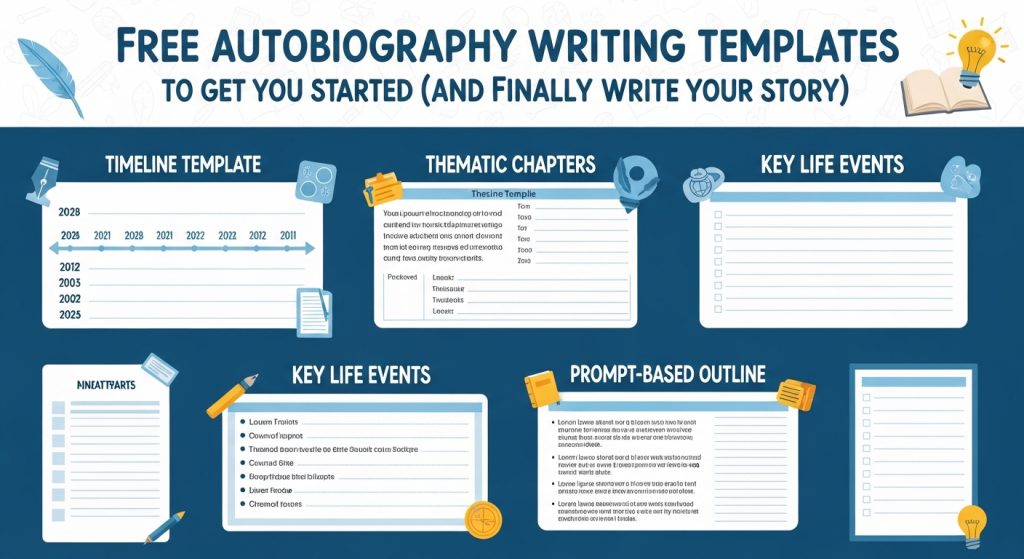
Here are three different types of templates. Pick the one that feels best to you, or mix and match!
Template 1: The Classic Timeline (Best for Beginners)
This template follows your life in order. It’s the most common way to write an autobiography, as explained in this detailed guide on how to write an autobiography. Just fill in the blanks with your memories.
Part 1: The Early Years
- I was born on [Date] in [Place].
- My parents were [Names]. My father was like… My mother was like…
- My childhood home looked/felt like…
- My favorite thing to do as a little kid was…
- A funny story my family still tells about me is…
- School was… My best teacher was… because…
- My first real friend was [Name]. We met when…
Part 2: Growing Up
- My teenage years were a time of…
- My first job was… It taught me…
- A big challenge I faced as a young adult was…
- I met [Partner’s Name] when… The early days of our relationship were…
- My first big adventure on my own was…
Part 3: My Adult Life
- My career path went like this: I started as a [Job], then…
- Becoming a parent changed me because…
- Some of the best times in my life were…
- Some of the hardest times in my life were… and I got through them by…
- An important lesson I learned during this time was…
Part 4: Looking Back and Moving Forward
- If I could give my younger self one piece of advice, it would be…
- The people who shaped me the most were…
- I am most proud of…
- My life today is… My hopes for the future are…
- The one thing I want people to remember about me is…
Template 2: The Theme-Based Template (Best for Finding Your Story’s Heart)
This template is about the “why” of your life. It’s great for finding the deeper meaning in your journey, much like the powerful life lessons from autobiographies that readers love.
My Theme:
- The main message or lesson of my life story is: [e.g., resilience, the importance of family, finding joy in simple things, second chances].
How This Theme Showed Up:
- Childhood Example: A time when I saw or learned this theme early on was…
- A Struggle: A moment when this theme was tested (a time I failed or faced a hard challenge) was…
- A Triumph: A moment when this theme helped me succeed or find happiness was…
- A Turning Point: A specific event that really showed me what this theme was all about was…
- Today: How does this theme show up in my life right now?
Template 3: The Memory Snapshot (Best for a Quick Start)
Don’t want to think about your whole life? Just pick a memory and describe it fully. You can connect these snapshots later. This method is perfect for getting started today.
My Memory Snapshot
- The date or time period of this memory:
- Where was I? (Describe the place in detail – what did you see, hear, and smell?)
- Who was with me?
- What was happening? (Tell the story of this one event).
- What was I feeling at that moment?
- What did I do?
- Why is this memory important? What did I learn from it?
How to Use These Templates: A Simple 4-Step Plan
You’ve got your templates. Now what? Here’s a simple way to use them, based on expert advice.
Step 1: Gather Your “Memory Triggers”
Before you write, look through old photo albums, letters, or souvenirs. Talk to an old friend or family member. This will get your memories flowing. According to the step-by-step guide, 78% of people who research their life story discover a new family fact!
Step 2: Brain Dump, Don’t Perfect
Pick a template and just start filling it in with bullet points or short sentences. Don’t worry about writing beautifully. Just get the facts and feelings down. Your only job right now is to remember.
Step 3: Turn Bullets into Stories
Now, pick one bullet point and turn it into a paragraph. Use your five senses. What did you see, hear, smell? What were you thinking? This is where your story comes to life. For example, instead of “Grandma was kind,” write “Grandma always had a plate of warm cookies waiting, and she’d say, ‘Sit down, tell me everything.'”
Step 4: Connect the Dots
Once you have a few stories written, start putting them in order. Use your timeline template to see where they fit. You’ll start to see your whole life story take shape.
Frequently Asked Questions (FAQs) About Using Autobiography Templates
Q: I’m not famous. Is my story even worth writing?
A: Yes, 100% yes! You don’t need to be famous. Your family and friends will treasure your stories forever. As the guide on what is an autobiography explains, these books preserve history for future generations. Your story is a gift.
Q: What if I don’t remember things perfectly?
A: That’s totally normal. Just be honest. Say, “I remember feeling…” or “As best I can recall…” Your memories are your truth. You’re not writing a legal document; you’re sharing your life.
Q: How is this different from a memoir?
A: Great question! An autobiography usually covers your whole life from birth to now (like the classic timeline template). A memoir focuses on one specific theme or time, like your years in the army or your journey through grief. For a deeper look at this, check out the article on autobiographies vs. biographies.
Q: What do I do if writing about something painful is too hard?
A: Be kind to yourself. You are in control. You can:
- Skip that part and come back to it later.
- Write about it in a general way.
- Change names to protect people.
- Talk to a counselor or trusted friend if it brings up too much. Your well-being comes first.
Q: How long should my autobiography be?
A: There’s no rule! It can be 50 pages or 500. Just write until you feel you’ve told your story. Most first-timers end up with 200-300 pages.
Q: Where can I find more inspiration?
A: Reading other life stories is a fantastic way to get inspired. You can find a list of best autobiographies of all time to get you started.
Real Stories, Real Inspiration: You Can Do This
Many people think their lives aren’t interesting enough to write about. But consider this: A 2022 survey found that 74% of adults said reading autobiographies helped them feel less alone in their own struggles. Your story of getting through a hard time, raising a family, or just living through decades of change could be exactly what someone needs to hear.
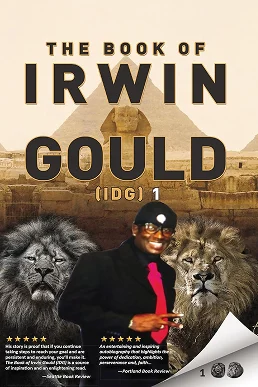
Think of authors like Irwin Gould, who wrote about his journey through loss and rebuilding his life. His story isn’t about being a movie star. It’s about being human. Your story has that same power.
Ready to Start? Here’s Your Call to Action
Your story is waiting to be told. You don’t need to be a great writer. You just need to be you.
Here’s your first step: Choose one of the templates above. Right now. Open a new document or grab a notebook. Pick one question from the “Memory Snapshot” template or the first section of the “Classic Timeline.” Spend just 15 minutes writing your answer. Don’t edit. Don’t judge. Just write.