

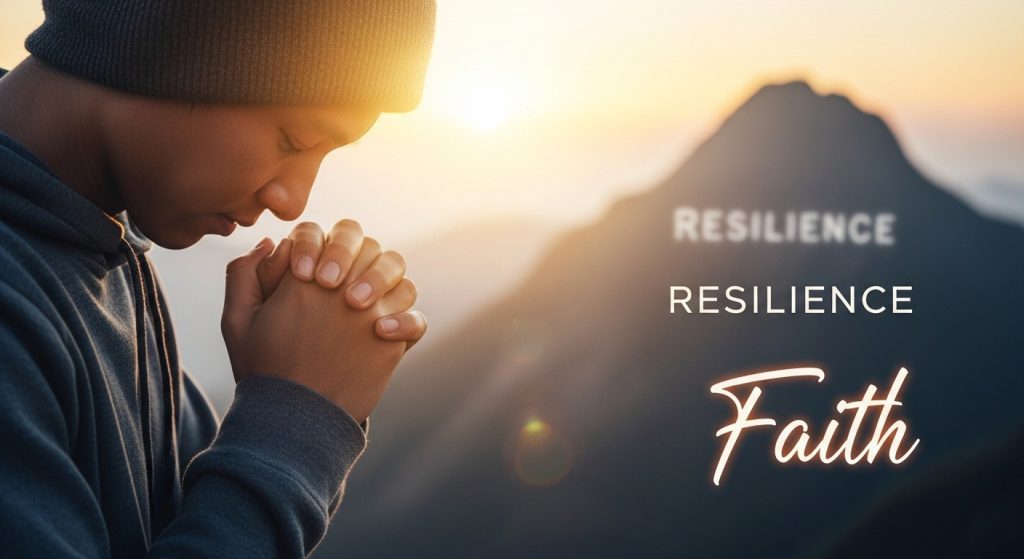
Life is full of challenges. We all face times of stress, loss, and difficulty that can leave us feeling overwhelmed and exhausted. In these moments, we need resilience—the ability to bounce back, to endure hardship, and to find strength we didn’t know we had. For many people around the world, a surprising and powerful source of this resilience is faith. This article will explain, in simple terms, how faith acts like an anchor in a storm, building a strength within us that can handle life’s toughest moments.
What Are Resilience and Faith?
First, let’s understand these two ideas.
- Resilience is your ability to recover from setbacks, adapt to change, and keep going in the face of adversity. It’s not about avoiding problems, but about navigating through them.
- Faith, in this context, is a deep-seated belief and trust in something greater than oneself. For many, this is a trust in God, a higher power, or a set of spiritual principles that give life meaning and purpose.
When these two forces connect, they create a powerful combination. Faith doesn’t make problems disappear, but it changes how we see them and equips us to walk through them.
How Faith Builds Your Resilience Skills
Here are the main ways that faith strengthens your ability to be resilient.
1. It Provides a Foundation of Meaning and Hope
When hardship strikes, a common question is, “Why is this happening?” Feelings of randomness and pointlessness can make pain feel heavier. Faith offers a framework of meaning. It suggests that your life has a purpose and that even suffering can be part of a larger story. This belief is a powerful antidote to despair. The famous psychiatrist Viktor Frankl, who survived the Holocaust, observed that those who held onto a sense of meaning and faith were far more likely to survive the horrors of the camps. Faith provides hope that goes beyond current circumstances, lighting a path forward when everything seems dark.
2. It Connects You to a Supportive Community
Human beings are not meant to suffer alone. One of the most practical ways faith builds resilience is through community a church, mosque, synagogue, or spiritual group. These communities provide:
- Tangual Support: Meals, help with chores, or a listening ear during illness or grief.
- Emotional Belonging: Knowing you are not alone and that others care about your well-being.
- Shared Wisdom: Learning from others who have walked similar paths of difficulty.
Studies back this up. Research from the American Psychological Association highlights that social support is a cornerstone of resilience. Faith communities are often built-in, ready-made support networks that rally around individuals in times of need.
3. It Offers Practices for Peace and Perspective
Faith traditions are filled with practical tools for managing stress and fear, which are resilience killers. These include:
- Prayer and Meditation: These practices slow down racing thoughts, reduce anxiety, and create a sense of peace. They allow you to process emotions healthily and gain clarity.
- Sacred Texts: Reading scriptures or spiritual wisdom can provide comfort, guidance, and perspective. Stories of others who overcame great obstacles can inspire your own journey.
- Gratitude: Most faiths encourage thankfulness. Actively counting your blessings, even small ones, shifts your focus from what’s wrong to what’s still right. This positive refocusing is a key resilience skill.
4. It Encourages Forgiveness and Lets Go of Burdens
Holding onto anger, bitterness, and resentment is like carrying a heavy backpack everywhere you go. It weighs you down and drains your energy energy you need to be resilient. Most faith traditions emphasize forgiveness, not as a way of saying a wrong was okay, but as a way of freeing yourself from the poison of past hurts. Letting go of these burdens makes you lighter, more flexible, and better able to handle new challenges.
5. It Cultivates Endurance Through a Bigger Story
Faith often reframes challenges not as pointless punishments, but as opportunities for growth, character development, or a test of endurance. The Bible’s book of James says, “Consider it pure joy… whenever you face trials of many kinds, because you know that the testing of your faith produces perseverance.” This idea that struggle can produce strength—helps people endure with patience, trusting that the difficulty is producing something valuable within them, much like exercise strengthens a muscle.
6. It Anchors You in an Unchanging Truth
When your world is shaking you lose a job, a relationship ends, illness strikes—it feels like everything is unstable. Faith provides an anchor. The belief in a God who is constant, loving, and in control offers a stability that external circumstances cannot shake. This anchor prevents you from being completely swept away by fear or despair, giving you a solid place to stand while you figure out your next steps.
Putting It Into Practice: Building Resilient Faith
Resilient faith isn’t automatic; it’s built through daily habits. Here’s how you can strengthen it:
- Start Small: Spend 5 minutes a day in quiet prayer or meditation. Talk to God or your higher power about your fears and hopes.
- Get Connected: If you’re not part of a community, visit one. Look for a group that is welcoming and focused on support and growth.
- Find a Mentor: Seek out someone in your faith community whose resilience you admire. Ask them how their faith has helped them through tough times.
- Serve Others: Helping someone else in their pain is a powerful way to gain perspective and strength. It gets your focus off your own problems.
- Keep a Gratitude Journal: Each night, write down three things you are thankful for. This trains your brain to spot the good.
Frequently Asked Questions (FAQs)
Q: Do I have to be religious to be resilient?
A: Absolutely not. Resilience can be built through many means: therapy, strong friendships, personal philosophy, and healthy habits. Faith is one powerful and proven path that millions choose, but it is not the only one.
Q: What if I’m struggling with doubt in my faith during a hard time?
A: Doubt is a normal part of a living faith. Many people of faith question “Why?” during suffering. Instead of seeing doubt as the opposite of faith, see it as an element of a deep and honest spiritual journey. Bring your doubts into your prayers and share them with a trusted spiritual friend or leader.
Q: Can faith really help with anxiety and depression?
A: Faith practices can be a significant source of comfort and coping. Many studies show that prayer and meditation can lower stress hormones. However, clinical anxiety and depression are medical conditions. Faith is a wonderful companion to professional help (like therapy or medication), not a replacement for it. Think of it as one essential tool in your wellness toolbox.
Q: How long does it take to build resilience through faith?
A: There’s no set timeline. Resilience is like a muscle it grows stronger each time you use it. Consistent small practices (prayer, community, gratitude) build your “resilience muscle” over time, so when a major crisis hits, you are stronger and better prepared.
Q: Where can I learn more about resilient faith?
A: Start by exploring the teachings and resources within your own faith tradition. Many also find great wisdom in books on topics like spiritual resilience or finding hope in hardship.
Conclusion: A Strength You Can Rely On
Resilience strengthened through faith is not about having a magic shield against pain. It is about having a wellspring of strength to draw from when pain comes. It provides meaning where there is confusion, community where there is loneliness, practices for peace where there is anxiety, and an unshakable hope that can look at the storm and say, “This is not the end of my story.”
By building the daily habits of faith connection, prayer, gratitude, and service—you are not just preparing for the next crisis. You are building a life of deeper strength, purpose, and peace, right here and now. Your challenges become a forge where a more resilient you is shaped, anchored by something and Someone far greater.