
Have you ever felt completely alone in your struggles? Like no one in the world could possibly understand the chaos happening inside your head?
You’re not alone. And that’s exactly why mental health autobiographies are so powerful.
These are true stories, written by people who have faced mental health challenges head-on. They open a window into someone else’s experience, but in doing so, they often hold up a mirror to our own. Whether you’re seeking comfort, understanding for a loved one, or simply want to learn, these books offer a unique and deeply human perspective.
In this guide, we’ll explore what mental health autobiographies are, why they matter, and how to find the right one for you. We’ll also look at how writing your own story can be a path to healing.
What Exactly is a Mental Health Autobiography?
Let’s break it down. An autobiography is a true story about a person’s life, written by that same person. It’s a first-hand account, using “I” and “me.”
A mental health autobiography is a sub-genre that focuses specifically on the author’s journey with mental health. It might cover their entire life, showing how mental health challenges shaped their path. Or, it might be a memoir, which zooms in on a specific period, theme, or experience, like a struggle with anxiety or a stay in a treatment center.
Think of it like this: a biography is your life story written by someone else. An autobiography is your whole life story, written by you. A memoir is a deep dive into one specific chapter of your life—and for mental health autobiographies, that chapter is often about the internal journey.
Key characteristics you’ll find in these books:
- First-Person Perspective: You experience the story through the author’s eyes, feeling their fears, hopes, and small victories.
- Radical Honesty: These aren’t polished, perfect stories. They share the messy, difficult, and raw parts of living with a condition like depression, bipolar disorder, OCD, or anxiety.
- A Journey of Insight: The author isn’t just listing events. They are reflecting on the past, sharing what they learned, and showing how they grew. This is what gives the story its power.
- Connection Over Isolation: By sharing their inner world, the author breaks the silence, showing readers that they are not alone.
Reading about someone else’s struggle might seem counterintuitive. But the benefits are backed by both experience and data.
1. You Realize You Are Not Alone
This is the most profound benefit. A 2022 survey found that 74% of adults said reading personal stories helped them feel less alone in their own struggles. When you read words that describe your own hidden feelings, the isolation begins to fade.
2. You Gain Hope
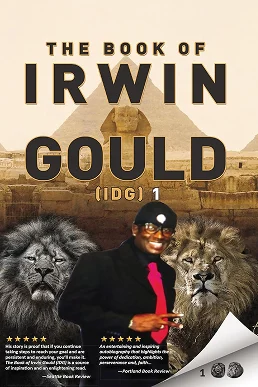
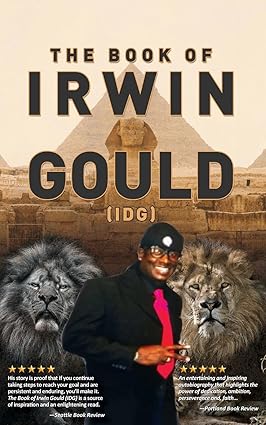
These books are not just about suffering; they are about surviving. They show that people do get through the darkest times. They are testimonies of resilience. As author Irwin Gould shares in his own story of facing challenges, these journeys prove that with hard work and resilience, things are possible.
3. You Develop Empathy and Understanding
For family members and friends, these books are an invaluable tool. They provide a roadmap into the mind of a loved one, explaining behaviors and feelings that might otherwise be confusing or frightening. They replace judgment with understanding.
4. You Learn About Treatment and Coping
Many memoirs include details about therapy, medication, self-help strategies, and what worked (or didn’t work) for the author. While everyone’s path is different, learning about these options can be incredibly helpful.
5. It Can Inspire Your Own Healing
Writing about our experiences can be therapeutic. Reading about how others have made sense of their pain can inspire you to start your own journey of self-reflection, perhaps even through journaling or writing a personal essay about yourself.
Finding Your Next Read: A Guide to Choosing
There are hundreds of mental health autobiographies out there. Here’s how to find one that’s right for you.
Step 1: Identify What You’re Looking For
- Are you seeking comfort? Look for memoirs that focus on hope, recovery, and finding a way forward. A book that ends on a positive note might be best.
- Do you want to understand a specific condition? Many memoirs focus on a single diagnosis, like bipolar disorder (An Unquiet Mind by Kay Redfield Jamison) or depression (The Noonday Demon by Andrew Solomon).
- Are you a family member seeking understanding? Look for books that discuss how mental health conditions impact relationships with parents, partners, and children.
- Do you want a story of resilience? Find narratives where the author overcame incredible odds, like Tara Westover’s Educated, which touches on family trauma and finding one’s own path.
Step 2: Know the Difference: Memoir vs. Autobiography
- Autobiography: Covers a whole life. Good for understanding how a condition has been a thread throughout someone’s entire journey.
- Memoir: Focuses on a specific theme or period. Good for diving deep into a particular experience, like a psychotic break or a battle with addiction.
Step 3: Use Trusted Resources
Don’t just rely on bestseller lists. Look for recommendations from professionals. For example, psychotherapists often have lists of books they recommend to clients because they are accurate, insightful, and ultimately hopeful.
3 Powerful Mental Health Autobiographies to Start With
To give you a sense of the genre, here are three highly recommended books that have helped countless readers.
| Title & Author | Focus | Why It’s Powerful |
| An Unquiet Mind by Kay Redfield Jamison | Bipolar Disorder | Written by a clinical psychologist who has bipolar disorder. It offers a rare and brilliant dual perspective—the scientific and the deeply personal. |
| The Collected Schizophrenias by Esmé Weijun Wang | Schizophrenia | A collection of powerful essays that explore the nuances of being diagnosed with a serious mental illness. It’s honest, intellectual, and beautifully written. |
| Darkness Visible by William Styron | Severe Depression | A classic, slim memoir about the author’s descent into a suicidal depression. It’s a masterclass in describing the indescribable, making it a must-read for anyone trying to understand the condition. |
From Reading to Writing: Could You Tell Your Own Story?
For many, reading these stories sparks a powerful question: Could I write my own?
Writing about your life and your struggles can be a deeply healing and meaningful act. You don’t have to be a professional writer. You just have to have a story to tell. The act of writing helps you make sense of your experiences and can be a gift to your family and others who are struggling.
If you feel the pull to start writing, here’s a simple path to begin:
1. Start with a Personal Essay, Not a Whole Book
A full autobiography can feel overwhelming. Instead, start small. Write about one specific memory, one turning point, one lesson learned. This is a great way to find your voice. For a simple plan, check out this guide on how to write a personal essay about yourself.
2. Understand What You’re Writing
Are you writing a full life story (autobiography) or a deep dive into a specific theme (memoir)? Knowing the difference will help you focus. Learn more about the key characteristics of an autobiography.
3. Create a Structure
Don’t stare at a blank page. Give yourself a plan. You can use a simple chronological structure or organize your story around themes like “My Path to Diagnosis” or “What My Family Taught Me.” For a detailed roadmap, explore The Ultimate Guide to Structuring Your Autobiography.
4. Find Inspiration
Look at how others have done it. Reading a variety of autobiography examples can show you the different ways people tell their stories.
Frequently Asked Questions (FAQs)
Q: I’m not a writer. Can I still write a mental health memoir?
A: Absolutely. Your story is what matters, not your grammar. The most important thing is that you have a story to tell and the desire to tell it. You can always hire an editor later to help polish the writing, but your authentic voice is the heart of the book.
Q: How do I write about painful memories without getting overwhelmed?
A: Your well-being comes first. Write in short sessions. Start with memories that feel safe. You can skip the most painful parts until later—or leave them out entirely. You are in control. The act of writing can be healing, but it’s okay to go slow and get support.
Q: What if I don’t remember everything perfectly?
A: That’s perfectly normal. You’re not writing a legal document; you’re writing your truth. Use phrases like “I recall…” or “As I remember it…” and focus on how the events felt.
Q: How do I write about real people, like my family, without hurting them?
A: This is a common concern. Focus on your own experience and perspective. Instead of saying “My mother was cruel,” you can say, “I felt unseen and hurt.” You can also change names, combine several people into one character, or alter identifying details to protect privacy.
Q: What’s the difference between an autobiography and a memoir again?
A: Think of it this way: an autobiography is your entire life story from birth to present, written in chronological order. A memoir is a deep dive into one specific theme or period of your life (like “My Struggle with OCD” or “The Year I Lost My Brother”). A mental health story can be either, but the memoir format is more common because it allows for a deep focus on the internal journey.
Your Story Can Be a Lifeline
Mental health autobiographies do something remarkable. They take the invisible pain of the mind and make it visible, tangible, and shareable. For the reader, they offer a lifeline—proof that they are not alone. For the writer, they offer a path to understanding and a way to leave a legacy of hope.
Whether you pick up a book to find comfort for yourself or to understand someone you love, you are taking a brave step. And if you feel the whisper of your own story wanting to be told, know that it has value.
Your experiences, your lessons, your voice they are unique in all of human history. That alone makes your story worth telling.
Ready to explore more? If you’re feeling inspired to put your own experiences into words, check out these helpful resources:
- 10 Autobiography Examples to Inspire Your Own Writing Journey
- The Ultimate Guide to Structuring Your Autobiography
Have you read a mental health autobiography that changed your life? Or are you starting to write your own story? Share your thoughts and questions in the comments below your voice could be the encouragement someone else needs today.