

Finding money unexpectedly can feel like a small jolt of surprise—one of those odd, subtle moments that makes you pause mid-step. You’re walking, thinking about your day, and then there it is. A coin. A bill. No explanation. It’s easy to brush it off as chance, but people have always wondered if there’s more behind it.
In fact, the idea of finding money meaning has been around for generations. Some see it as a coincidence. Others read it as a signal—something maybe even personal. And while there’s no single answer that fits everyone, the experience tends to carry a certain emotional weight that’s hard to ignore.
A Strange Little Moment That Sticks With You
Let’s be honest. Finding money doesn’t happen every day. And when it does, it tends to stay in your mind longer than it should.
Why?
Because it interrupts the routine, and it’s unexpected, almost out of place. One minute you’re in your own head, the next you’re holding something that wasn’t yours a second ago. That break in pattern is what gives it meaning, or at least, the feeling of meaning.
People often associate moments like this with lucky signs.
Not About the Amount, But the Timing
Here’s the thing. The value of the money rarely matters.
A single coin found on a rough day can feel more meaningful than a larger amount found casually. Timing changes everything. You might be stressed, distracted, or even discouraged, and then something small shows up right in front of you.
That’s where the idea of finding money unexpectedly starts to alter. It becomes less about currency and more about context.
It’s similar to hearing the right song at the right moment. It’s not just the song, but it’s when you heard it.
A Reminder That You’re Not As Alone As You Think
Some people interpret these moments as a form of reassurance.
Life can feel random. Chaotic. You make plans, things fall apart, and sometimes it seems like nothing lines up. Then something simple happens—a small, positive interruption.
Finding money unexpectedly can feel like a gentle nudge that says, “Things aren’t completely off track.” It doesn’t solve anything. It doesn’t fix your problems. But it softens the moment, even if just a little.
The Psychology Behind It (Yes, There’s One)
Let’s step back for a second.
From a psychological point of view, humans are wired to assign meaning to unexpected events. It’s how we make sense of uncertainty. When something unusual happens, like finding money unexpectedly, your brain tries to connect it to your current emotional state.
That’s why the same event can feel different depending on your mood:
- Feeling hopeful? It feels like confirmation
- Feeling lost? It feels like guidance
- Feeling neutral? It feels like a coincidence
The meaning isn’t fixed. Basically, it’s shaped by you.
Finding Money Unexpectedly: Small Moments That Add Up
Not everything meaningful has to be big. That’s a lesson people tend to forget.
We often look for major turning points, big wins, and dramatic changes. But life doesn’t usually work like that. It moves in smaller increments that build over time.
That’s where small blessings come in. It can just appear, almost casually, like a coin on the ground. Finding money unexpectedly fits into that category. It’s a moment you could easily ignore, but if you notice it, it adds a subtle layer to your day.
A Nudge Toward Awareness
There’s another angle worth considering.
Moments like these can make you more aware of your surroundings. Think about it… How often do you actually look down while walking? How often do you notice details that aren’t directly related to what you’re doing?
Finding money unexpectedly might say less about luck and more about attention.
You noticed something others didn’t. You were present enough, even for a second, to see what was right in front of you.
And that’s not nothing.
The “Energy” Perspective (Even If You’re Skeptical)
Not everyone believes in energy, signs, or anything beyond the physical explanation. That’s fair.
But even from a practical standpoint, the idea has value.
When people interpret finding money unexpectedly as something positive, it can change their mindset. And mindset affects behavior, then behavior affects outcomes.
It’s a simple chain reaction:
- You see the moment as positive
- You feel slightly more optimistic
- You make better choices, even in small ways
So whether or not there’s something deeper at play, the effect can still be real.
When It Happens More Than Once

Now this is where it gets interesting.
If you find money once, it’s easy to dismiss. Twice? Still a coincidence. But if it keeps happening, even occasionally, people start to pay attention. Patterns, even loose ones, create curiosity.
You might start asking questions like:
- Why now?
- Why here?
- Why me?
Finding money unexpectedly multiple times can make it feel less random, even if it technically is. And that curiosity? It pulls you into a more reflective state, whether you realize it or not.
A Brief Tangent—But It Matters
Let me explain something that often gets overlooked.
Meaning doesn’t always come from the event itself. Sometimes it comes from what the event makes you think about afterward. You find money, you pause, and you begin to reflect. You start noticing other things like your habits, your patterns, and your thoughts.
That’s the real value.
If a small moment leads to deeper awareness, then it’s already done more than most daily experiences.
Not Everything Needs a Grand Explanation
Here’s a mild contradiction, and it’s worth sitting with.
Sometimes, finding money unexpectedly means something. Sometimes, it doesn’t. And that’s okay. Not every moment needs to carry a message. But if it feels meaningful to you, then it has value, regardless of whether there’s a universal explanation behind it.
Humans are meaning-makers. That’s part of how we process life.
A Broader Lens on Meaning
If you’re curious about how people interpret symbolic moments and coincidences, you can explore this resource from Psychology Today: https://www.psychologytoday.com/us/basics/synchronicity.
It offers an interesting look at how humans assign meaning to everyday events that might seem random at first glance.
Where Stories Like This Come Alive
And here’s where it all connects in a more personal way.
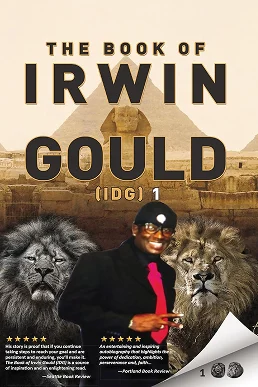
Stories—real ones—tend to capture these moments better than explanations ever could. That’s exactly what makes The Book of Irwin Gould series stand out.
Irwin David Gould, Jr.doesn’t depict success as a straight path. His journey moves through loss, faith, and unexpected turns—moments that don’t always make sense right away but start to form a pattern over time.
In The Book of Irwin Gould 2: 2 Bubbles and Sudz, Plus, he reflects on subtle signs that show up in daily life, the meaningful experiences, a chance encounter, or a shift in perspective. Even something as simple as finding money on the ground.
It’s framed as awareness.
Then there’s The Book of Irwin Gould 3: Health is Wealth, which shifts the focus to physical and spiritual well-being. It highlights something people often overlook—meaning isn’t only found in rare moments. It’s built through habits, attention, and how you care for your body and mind.
A Thought Worth Holding Onto

So what does finding money unexpectedly really represent?
It could be a chance. It could be awareness. It could be a gentle reminder to stay present, to notice more, to appreciate the small breaks in routine that make life feel a bit less mechanical.
Or maybe, it’s all of those things at once.
A Simple Next Step
If moments like these catch your attention—if you’ve ever paused and wondered whether something small might carry a deeper message, then it might be worth exploring stories that lean into that idea.
The Book of Irwin Gould series offers that kind of perspective, encapsulating real experiences that connect everyday events with something more reflective.
You might find recognition, the kind that makes you think, “I’ve felt that too.” And let me guess, that’s exactly what you need. Grab your copies now!